
 info@indiafashionicon.com
 Trunal Sahuji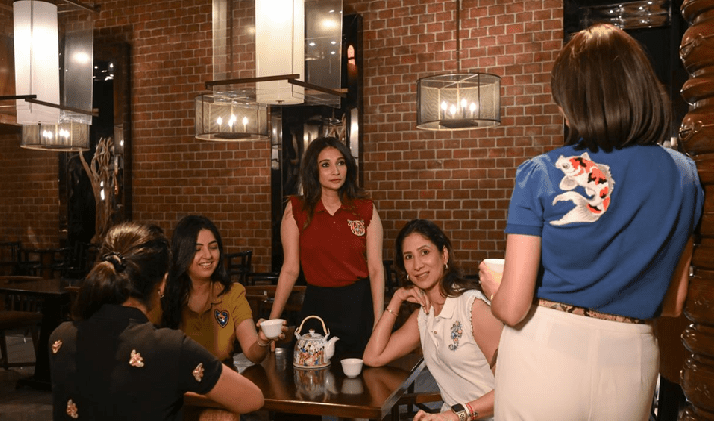
 इस खबर को सुनने के लिये प्ले बटन को दबाएं।


T-shirts have long been casual staples. But lately, they’ve become canvases for expression. In The Hindu’s piece “What Would You Like on Your T-Shirt?”, the author explores how slogans, graphics, and personal statements on T-shirts are becoming tools of identity, protest, humour, and branding.
Rather than mere clothing, a T-shirt today tells a story—of who you are, what you stand for, or what you want others to think.
The Rise of the Statement Tee
First, the article charts the evolution of the T-shirt from functional undergarment to a mode of self-expression. Over time, printers and designers began adding logos, catchphrases, and images. Now, the “statement T-shirt” is a category unto itself.
People don’t just wear cotton and thread—they choose what words, images, or symbols they want others to “read” on them. Be it witty quips, political slogans, fandom motifs, or memes—the shirt becomes a billboard for the self.
Identity, Belonging & Rebellion
One key theme is how T-shirt slogans reflect identity. For some, wearing a shirt with a linguistic pun or vernacular phrase asserts belonging to a region or subculture. For others, a political slogan becomes protest (silent but visible).
In that sense, the T-shirt becomes a subtle rebellion. Instead of shouting, wearers let fabric speak. For instance: anti-establishment lines, feminist quotes, or calls around climate change—all printed neatly across the chest.
Thus, the shirt can simultaneously project belonging and dissent.
Commercialization & Co-option
However, the article doesn’t shy away from tensions. When protests become fashion trends, slogans may be co-opted. What began as activism sometimes becomes marketing.
Moreover, brands may dilute or appropriate these slogans to sell more. The tension lies in authenticity: is the wearer genuinely aligned with the message, or merely following a trend?
Hence, the piece asks: when a message becomes mass merch, does its meaning fade?
Customization: Democratizing Design
Another strand in the article discusses how technology has made it easier for people to design their own T-shirts. Online platforms and print-on-demand services mean anyone can print a phrase or image.
Thus, the barrier between designer and consumer is lowered. You no longer need to be a fashion label to have your message worn by others.
For more style updates & exclusive fashion stories follow indiafashionicon.com
 Publisher