

 info@indiafashionicon.com
 Publisher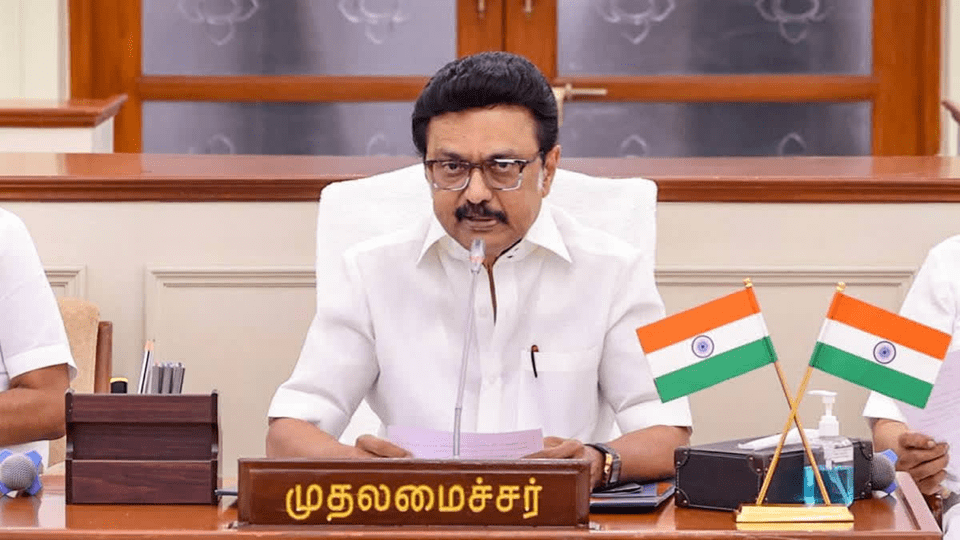
 इस खबर को सुनने के लिये प्ले बटन को दबाएं।


India’s export-oriented industries are facing mounting challenges as steep US tariffs on Indian goods take toll on businesses and jobs, particularly in Tamil Nadu — one of the nation’s most industrialised and export-reliant states. Government leaders are now urging New Delhi to accelerate trade negotiations with Washington as exporters confront shrinking orders and revenue losses.
Daily Losses and Order Collapse in Textile Hubs
Tamil Nadu Chief Minister M. K. Stalin has sounded the alarm, reporting significant daily revenue losses and a collapse of export orders across key districts. In Tiruppur, India’s knitwear capital, exporters have seen confirmed orders worth ₹150 billion wiped out, forcing production cuts of up to 30 % and pushing small and medium enterprises toward crisis.
The tariffs, set at an exceptionally high 50 % on many Indian goods by the United States earlier this year, have made Indian exports less competitive relative to rivals such as Bangladesh and Vietnam, whose tariff rates remain lower.
Labour-Intensive Sectors Bear the Brunt
Labour-intensive industries — including textiles, apparel, gems and jewellery, and leather and footwear — have been particularly hard hit by the punitive duties. Tamil Nadu alone contributes roughly 28 % of India’s textile exports and 40 % of leather and footwear exports, employing millions of workers who now face uncertain wage prospects and layoffs.
Political and Economic Pressure Mounts
Stalin’s letter to Prime Minister Narendra Modi framed the tariff dispute as an “escalating crisis” and a looming humanitarian challenge due to the scale of economic disruption. He urged immediate diplomatic action to resolve the trade impasse through bilateral agreements, warning that prolonged tariffs could inflict irreversible harm on India’s manufacturing ambitions and export ecosystem.
Broader Trade Strategy and Diversification Efforts
In parallel, Indian officials are pursuing broader trade strategies to offset tariff pressures. The government is fast-tracking free trade agreements (FTAs) with partners such as the European Union, New Zealand, Chile and Oman to diversify export markets beyond the United States and reduce dependency on a single trading partner.
Despite these efforts, exporters and policymakers alike acknowledge that the current tariff regime — and the stalled trade talks with the US — continues to cloud India’s export outlook, heightening calls for urgent resolution to protect jobs and sustain economic growth amid global trade uncertainties
For more style updates & exclusive fashion stories follow indiafashionicon.com

 Publisher