

 info@indiafashionicon.com
 Publisher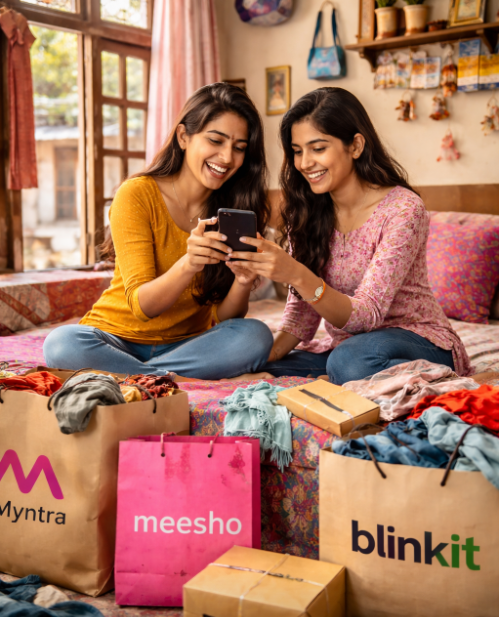
 इस खबर को सुनने के लिये प्ले बटन को दबाएं।


India’s consumption story is undergoing a significant transformation as fast-fashion retailers and quick-commerce delivery apps increasingly target smaller cities and towns outside traditional urban centers. Analysts say this trend points to a broadening of demand well beyond the affluent urban elite, tapping into what is often described as “India 2” — a demographic of price-sensitive, aspirational consumers in Tier 2 and Tier 3 markets.
Retailers Tailor Strategies for India 2 Consumers
Fast-fashion chains such as Zudio, the Tata Group’s value-oriented brand, have rapidly expanded nationwide, with more than 800 stores in less than a decade by offering affordable apparel and beauty products designed specifically for non-metro buyers. This contrasts with global fast-fashion players whose physical footprints remain concentrated in major cities.
Inside smaller cities like Dehradun, consumers are flocking to these stores, where everyday clothing items are priced well below premium brands — for example, basic sweatshirts and jeans priced around $10 and sneakers near $11 — making them accessible to a wider audience.
Quick Commerce Apps Broaden Their Footprint
E-commerce delivery platforms including Blinkit, Zepto and Swiggy are rapidly rolling out coverage in smaller urban centers, driven by rising demand and economics that favor lower operational costs. Lower real estate rents and lighter competition allow companies to make dark store models more viable; a Tier 2 city dark store can break even at approximately 800 orders per day, down from about 1,300 in Tier 1 cities, according to industry estimates.
This expansion is reshaping local retail, with flash deliveries of groceries, cosmetics and everyday essentials becoming increasingly common even outside India’s major metros.
Investor Confidence Bolstered by Meesho’s IPO
Investor interest in India’s consumption story in smaller cities received a boost from the strong debut of Meesho’s IPO, which surged nearly 60% and valued the company at $8.5 billion. The online marketplace’s growth underlines the potential of digital platforms targeting consumers beyond the big cities, with nearly 90% of its buyers residing outside India’s top metropolitan markets.
Brands Localize Content and Price Points
Alongside retail and delivery expansions, global digital platforms are also localizing to capture the India 2 opportunity. Streaming services like Netflix have rolled out cheaper mobile-only plans and invested in regional-language content to attract subscribers outside major urban hubs, while Amazon Prime Video has expanded its vernacular offerings and acquired MX Player to deepen reach into non-metro markets.
Broader Implications and Challenges Ahead
While these developments signal promising growth in consumption across smaller cities, they also highlight the challenges of executing tailored strategies in diverse markets. Some international brands, including Harley-Davidson, have encountered mixed results when applying imported business models that may not fully align with local consumer behavior.
Overall, India’s consumption landscape appears to be becoming more distributed, with Tier 2 and Tier 3 cities emerging as meaningful drivers of long-term demand. This shift is prompting companies to rethink product assortments, pricing and logistics to better serve price-sensitive and digitally connected consumers outside traditional urban centers.
For more style updates & exclusive fashion stories follow indiafashionicon.com

 Publisher