
 info@indiafashionicon.com
 Publisher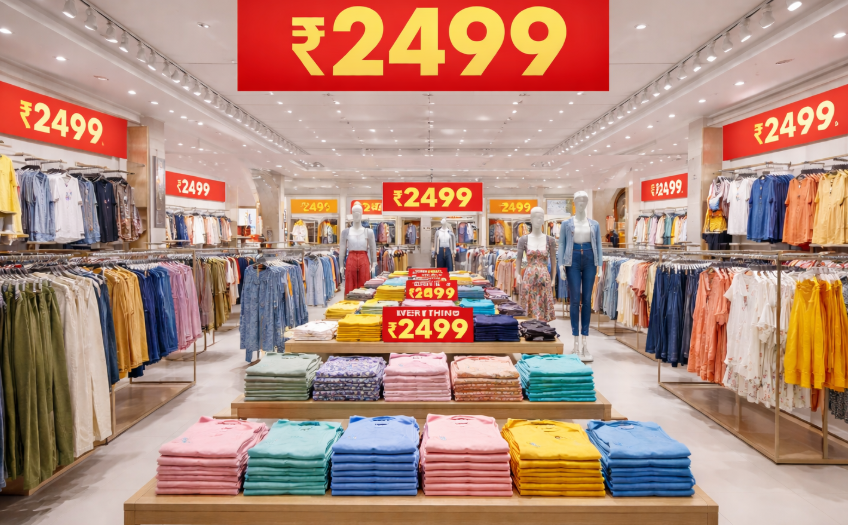
 इस खबर को सुनने के लिये प्ले बटन को दबाएं।


India’s booming apparel market, estimated at ₹9.3 lakh crore in FY25, is undergoing a strategic shift as leading fashion retailers increasingly focus on offering products priced at ₹2,499 or below — a pricing threshold that is rapidly reshaping how brands compete and consumers shop.
The Power of the ₹2,499 Price Anchor
Retailers across the country are clustering apparel around the ₹2,499 price point, driven in large part by tax incentives and consumer behaviour trends. Apparel priced at or below this threshold benefits from a lower goods and services tax (GST) rate of 5%, compared with an 18% GST on items priced just above that mark — making value‑priced clothing significantly more attractive to price‑sensitive buyers.
This shift has transformed pricing from a simple number on a tag into a strategic lever for growth. The ₹2,499 benchmark is now influencing product design, merchandising decisions, and even how brands position themselves in the market.
Growth of Value Fashion
According to industry data, the value fashion segment — largely defined by goods priced around or below ₹2,500 — accounts for approximately ₹3.5 lakh crore of India’s apparel market and is projected to expand at a compounded annual growth rate (CAGR) of around 7% through FY30, reaching nearly ₹5 lakh crore by the end of the decade.
Brands that have embraced this focus, including Zudio, Max Fashion, and Reliance’s Yousta, have rapidly expanded in Tier‑2 and Tier‑3 cities, where affordability often trumps premium branding. These markets now form a substantial chunk of India’s fashion consumption, with value retailers leading the transition from unorganised to organised retail formats.
Pressure on Premium Apparel
By contrast, mid‑ and high‑priced apparel categories — those significantly above ₹2,500 — are facing challenges. With consumers increasingly opting for value‑priced alternatives, premium segments are seeing neutral to weak demand, forcing many brands to rethink pricing, offer deeper discounts, or absorb some of the tax burden to stay competitive.
This trend reflects broader shifts in Indian consumer behaviour, where even fashion‑conscious youth from smaller cities and towns prioritise value and versatility over pure brand prestige.
For more style updates & exclusive fashion stories follow indiafashionicon.com
 Publisher