
 info@indiafashionicon.com
 Publisher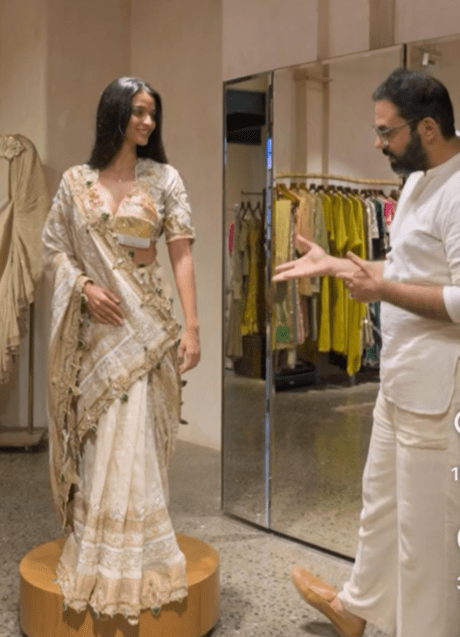
 इस खबर को सुनने के लिये प्ले बटन को दबाएं।


What began as a creative pursuit during student days — sketching, doodling, exploring art — has evolved into a full-fledged mission for Pankaj S. Chadha. Today, under the label Pankaj S Heritage, he describes himself not merely as a fashion designer but as a curator of India’s fading textile and embroidery traditions.
“For me, it’s not enough that we practise art for ourselves,” Chadha recalls. “Rather, we must ‘take it out to the world’ — ensuring that the beauty of traditional craft is witnessed, while preserving its authenticity and novelty.”
Having graduated from a fashion institute (in New Delhi), he spent years understanding the fast-fashion and ready-to-wear world. But eventually, the urge to reconnect with legacy, handwork, and meaning pulled him toward reviving India’s ancient textile heritage.
Breathing Life Back Into Age-Old Crafts
What sets Pankaj S Heritage apart is its deep involvement with artisan communities across India. The label currently works with roughly 15 artisan clusters in regions like Srinagar, Lucknow, Rampur, Jaipur, Udaipur, Murshidabad, Burdwan, and Kochi.
Whether it’s the delicate “hawa ka kaam” embroidery — a technique so intricate it feels like the needle is stitching mid-air — or layering multiple crafts (chikankari, jamdani muslin weaving, gota patti, beetle-wing detailing), the creations are more than outfits — they’re works of heritage, stitched by master artisans whose techniques were on the verge of extinction.
One example: a 400-count muslin saree handwoven in West Bengal, later sent for chikankari embroidery in Lucknow, then to Rampur for baadla work, followed by gota patti from Rajasthan — and finished with delicate beetle-wing embellishments. The result: a couture piece that carries the soul of India’s regional crafts in a single ensemble.
Quality Over Quantity
In an age where fashion often rewards speed and mass production, Pankaj S Heritage chooses patience. The atelier reportedly makes only about 30 chikankari pieces annually — each handcrafted with meticulous care.
Chadha believes that rapid production undermines craftsmanship. Instead of churning out seasonal lines just for business, his emphasis is on creating heirloom-quality pieces — garments that stand out for their skill, their story, their soul. “Our job is to be custodians of craftsmanship — not merchants of fast fashion,” he says.
Educating Patrons — Couture With Context
When someone visits the atelier, Chadha doesn’t just show them garments — he walks them through the history, technique, and lineage of each embroidery style. From wall-hanging sample-charts documenting different stitches to showing the origin of fabrics and crafts, the experience is curated to be more like a mini-museum than a boutique.
This approach challenges the consumer mindset: clothing becomes more than fashion — it becomes heritage, identity, and conscience. It’s a way to ensure that buy-in isn’t just about looks or trends, but respect and understanding of craftsmanship.
For more style updates & exclusive fashion stories follow indiafashionicon.com
 Publisher