
 info@indiafashionicon.com
 Publisher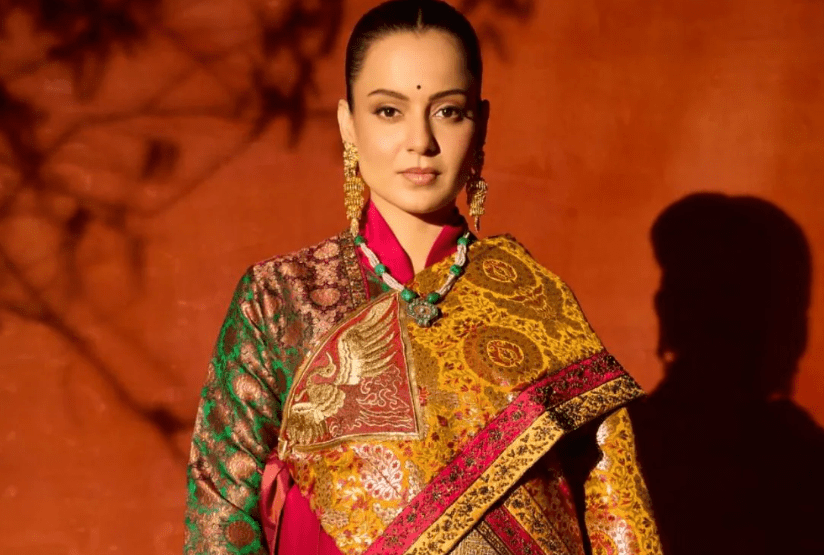
 इस खबर को सुनने के लिये प्ले बटन को दबाएं।


Actress Kangana Ranaut recently made headlines by donning a stunning Ladakhi-inspired ensemble that marries traditional Himalayan style with contemporary couture. The outfit — crafted by Namza Couture — re-imagines the classic Goncha attire as a luxurious Banarasi-silk creation.
Designed originally for the chill of Ladakh’s mountain climate, the Goncha is a long robe traditionally made of wool, velvet or cotton — meant to provide warmth and comfort. In Kangana’s version, however, the garment is transformed into a regal, gown-like creation called Mogos, layered with a mustard “Bok” shawl — a nod to traditional Ladakhi winter-wear — along with elaborate accessories and jewellery that elevate the ensemble into high-fashion territory.
Styling
Kangana’s look featured a rich green brocade Mogos gown, artfully paired with the customary Bok shawl — typically fashioned from goat-skin or silk to withstand Ladakh’s cold — giving the outfit depth and regional authenticity.
Complementing the attire, she wore large golden chandelier earrings, a traditional “pahadi” necklace with a green pendant and beads, an emerald ring, and a red micro-bindi — all contributing to a regal yet rustic aesthetic inspired by mountain heritage. The overall effect blended couture elegance with cultural roots.
A Statement for Local Craft — and Cultural Pride
By choosing a Ladakhi-inspired Goncha rather than a conventional gown or saree, Kangana sent a message: regional and mountain-heritage fashion deserves equal spotlight and celebration. Her choice resonated with the growing movement in India to embrace traditional textiles and indigenous garments — even beyond their native contexts.
This isn’t the first time Kangana has championed such outfits: earlier in the year she publicly asked fashion writers not to mislabel the Goncha as an “Anarkali,” and reiterated that “not everything is Anarkali.” Her recent look adds to that narrative — showing that heritage wear can be glamorous, wearable, and worthy of runway or red-carpet status.
Beyond aesthetic appeal, many view the outfit as a symbol of pride — a statement for cultural roots, local craftsmanship, and the richness of India’s diverse sartorial heritage.
For more style updates & exclusive fashion stories follow indiafashionicon.com
 Publisher