
 info@indiafashionicon.com
 Publisher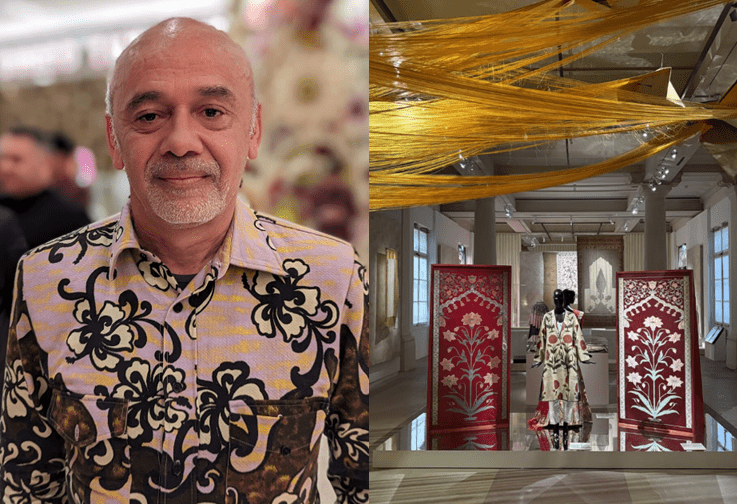
 इस खबर को सुनने के लिये प्ले बटन को दबाएं।


From December 4, 2025 to January 7, 2026, the prestigious Mobilier National in Paris will host an extraordinary exhibition titled Ce Qui Se Trame – Histoires tissées entre l’Inde et la France — a cultural project celebrating the intertwined histories of Indian and French textile crafts and design.
The exhibition is organised jointly by the French state-run Manufactures nationales – Sèvres & Mobilier National, the Institut français, and the French Embassy in India under the programme Villa Swagatam. Artistic direction is overseen by iconic designer Christian Louboutin, along with guest curator Mayank Mansingh Kaul, who structured the narrative and curated the works on display.
A Multi-Layered Journey
The exhibition is divided into seven immersive spaces, each tracing a different thread in the shared textile heritage of India and France — from colonial-era muslins to contemporary art.
-
L’Antichambre — a recreation of an 18th-century French apartment, entirely lined with Indian hand-printed textiles. The setting draws on historical links when Indian fabrics were imported to Europe, influencing decoration and fashion.
-
Toiles Blanches — a tribute to raw materials, showcasing hand-spun and hand-woven Indian cotton muslins, alongside traditional French lace and embroidery, highlighting how early Indian textiles shaped French textile history.
-
Modes Indiennes — explores the introduction and impact of Indian chintz, palampores and block-printed cottons on French interiors and clothing starting from the 17th century. It also delves into how motifs like the paisley, derived from Kashmiri shawls, found their way into European fashion.
-
Le Fil d’Or — a textile-rich segment celebrating luxurious brocades: silk and metallic thread fabrics whose techniques travelled between Lyon (France) and weaving hubs such as Varanasi (India), showcasing cross-pollination of craft techniques.
-
Le Chic à l’Indienne — a contemporary reinterpretation of the traditional Indian sari. Collaborations with Indian craft houses (notably the label Raw Mango) and artisans give new forms to the sari for modern audiences — highlighting fusion of couture and craft.
-
Sculpter les Corps — brings in textile-based contemporary art: sculptural works, installations and fabric experiments by artists from India and France, marrying crafts, performance and modern social commentary. Participating artists include the likes of Mrinalini Mukherjee, Sheila Hicks and members of the collective Ateliers Chanakya.
-
Un Langage Universel — the final space uses denim — itself a material rooted in cross-continental textile history (originally woven with Indian indigo but developed in France/Europe) — to evoke the enduring global dialogue of fabrics, dye, labour and design. It also features tapestries like After Paris by Indian artist Viswanadhan, weaving contemporary identity into heritage.
Alongside the displays, the exhibition is backed by a small festival (from December 4 to 7, 2025), organised by the Institut français. For the public — and especially craft enthusiasts — this offers workshops, live demonstrations, artisan talks and even participatory art.
One standout activity: a communal embroidery workshop by Lesage Intérieurs (resident house at 19M) — visitors will together create an “Indigo Tree of Life” embroidery piece, using traditional Indian embroidery and natural dye techniques. It echoes the cross-cultural spirit of the exhibition itself.
Why “Ce Qui Se Trame” Matters
-
Textiles as cultural diplomacy: The show evolves beyond mere display — it is a testament to decades (centuries) of artistic, cultural and commercial dialogue between India and Europe. By presenting shared heritage through textiles, it fosters deeper appreciation of cross-continental craft relations.
-
Bridging heritage and modernity: By juxtaposing ancient muslins, block-prints and traditional brocades with modern sculptural textile art and contemporary fashion reinterpretations, the exhibition demonstrates how age-old crafts remain relevant and alive in 2025.
-
Promoting artisan communities: Showcasing and elevating artisan craftsmanship — from hand-loom weavers to master embroiderers — can inspire renewed interest and support for traditional crafts, often at risk in an era of mass production and fast fashion.
-
A sensory, immersive experience: The blend of textiles, space-design, art installation, performance and participatory workshops makes the exhibition not just a visual treat but a tangible, tactile celebration of fabric — its texture, history, labour and soul.
For more style updates & exclusive fashion stories follow indiafashionicon.com
 Publisher