
 info@indiafashionicon.com
 Publisher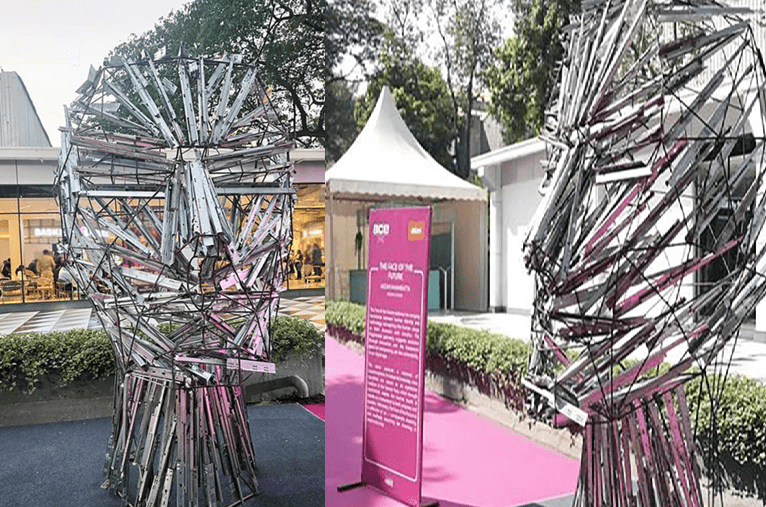
 इस खबर को सुनने के लिये प्ले बटन को दबाएं।


At ACETECH Mumbai 2025, a leading architecture and design exhibition held in India’s financial capital, artist and sculptor Arzan Khambatta presented an arresting sculptural installation titled The Face of the Future, part of his ongoing SCRAPTURES body of work. Rather than celebrating technology’s relentless pace, the installation invites viewers to pause, reflect, and consider the deeper impact of technological progress on human life.
A Quiet Yet Provocative Work
Khambatta’s installation differed from typical exhibition attractions — it eschewed spectacle in favour of quiet intensity, compelling visitors to stop and truly engage with the art. Constructed using Blum’s TANDEM runners, precision-engineered furniture fittings repurposed into expressive sculptural elements, the piece maintained an understated presence that nonetheless drew attention.
The work doesn’t offer solutions; instead, it raises urgent questions about how technology is reshaping our humanity, what might be lost in the pursuit of progress, and where we are headed as a society. It resonates as a mirror to modern existence, juxtaposing industrial materiality with the rawness of lived experience.
From Architecture to SCRAPTURES
Trained as an architect, Khambatta originally worked within conventional frameworks of form and function. Over time, he turned to discarded materials — wood, metal, and industrial remnants typically dismissed as waste — to create SCRAPTURES, a distinctive sculptural practice that integrates fragments of human experience into raw, imperfect assemblages.
His latest creation, The Face of the Future, reflects this philosophy. Rather than presenting a sleek, utopian vision of tomorrow, the piece exists in a liminal space between past and future, familiar yet unsettling — a visual metaphor for the tension between technological evolution and emotional identity.
Art as a Catalyst for Introspection
Khambatta’s work at ACETECH highlights how art can do more than decorate exhibition halls — it can spark meaningful conversations about contemporary life. Speaking about the installation, he noted that using everyday industrial hardware in a larger narrative underscores the paradox of human progress: “We’re changing, along with technology, evolving but still searching for meaning.”
Neelam Shah, Head of Marketing at Blum — whose TANDEM runners were featured in the sculpture — echoed this sentiment, emphasising art’s ability to make audiences stop and reflect on the growing human–technology relationship, a dialogue often overlooked amid rapid advancement.
A Thoughtful Statement in a Fast-Moving World
In an age characterised by acceleration and innovation, Khambatta’s SCRAPTURE stood out for its intellectual depth and emotional resonance. Rather than celebrating technology, it challenged viewers to examine how such progress impacts identity, connection, and the essence of being human.
As part of ACETECH Mumbai 2025, the installation marked a subtle yet powerful moment — one that underlined the role of art not just in design and architecture, but in prompting reflection in a high-speed world
For more style updates & exclusive fashion stories follow indiafashionicon.com

 Publisher