

 info@indiafashionicon.com
 Publisher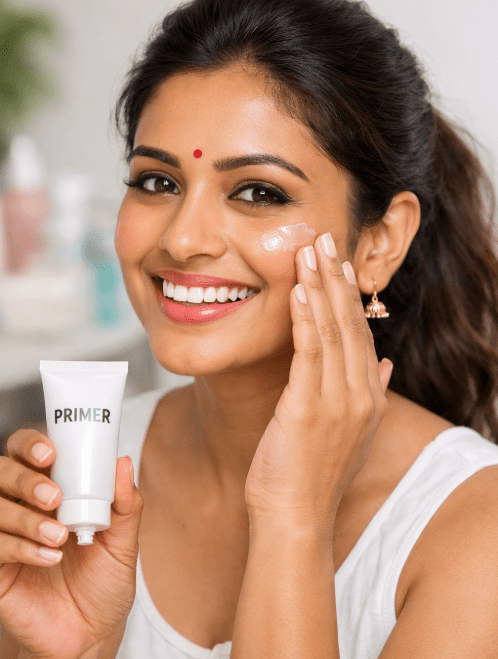
 इस खबर को सुनने के लिये प्ले बटन को दबाएं।


Many makeup beginners treat primer as an optional extra — something you can skip once you’ve got foundation, concealer and other products in hand. However, beauty experts say primer plays a more important role than most people think when it comes to how your makeup looks and lasts.
What Primer Actually Does
A makeup primer is a prep product applied right after skincare and before foundation. Its job is to:
-
Smooth out the skin surface by blurring large pores and fine lines.
-
Even skin texture so foundation and concealer have a smoother base to adhere to.
-
Control oil or dryness, depending on your skin type.
-
Help makeup stay put longer throughout the day.
By layering this protective buffer between your skin and makeup, primer also reduces direct contact of heavy cosmetics with your skin, which can help maintain your skin’s natural barrier.
Makeup Without Primer: Common Effects
Applying makeup straight onto bare skin isn’t “wrong,” but it often leads to visible differences in finish and longevity:
1. Uneven Texture and Coverage
Foundation may settle into pores and fine lines, making skin look uneven or emphasising bumps and texture.
2. Shorter Wear Time
Without primer’s grip, makeup can break down faster — especially in hot and humid conditions — leading to patchy or faded coverage before the day ends.
3. More Visible Oiliness or Shine
If you have oily or combination skin, skipping a mattifying primer means your makeup can slide or look greasy more quickly.
4. Potential Pore Clogging (Indirectly)
Primer itself doesn’t cause acne, but makeup sitting directly on the skin for long hours can clog pores, especially if your cleansing routine isn’t thorough.
Primer isn’t absolutely necessary for everyone. Experts say that if you have well-hydrated skin and wear minimal makeup, you can safely skip primer and still get a natural, fresh look.
For more style updates & exclusive fashion stories follow indiafashionicon.com


