
 info@indiafashionicon.com
 Publisher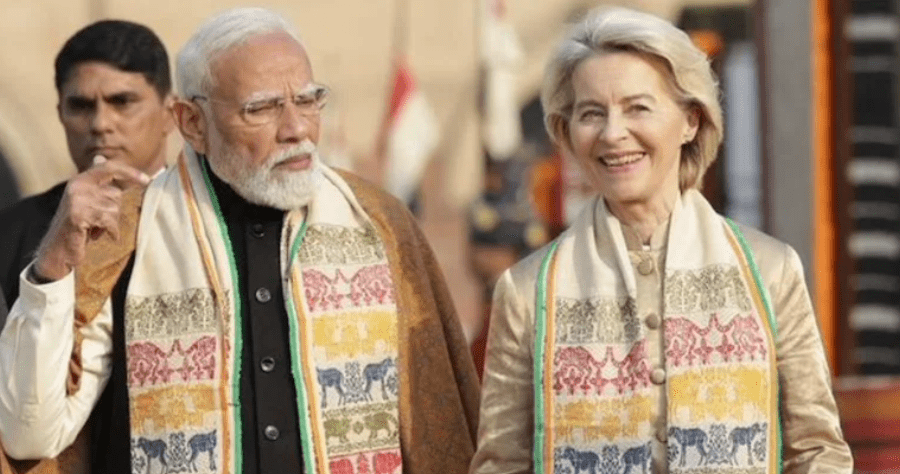
 इस खबर को सुनने के लिये प्ले बटन को दबाएं।


In a symbolic blend of culture and diplomacy, Prime Minister Narendra Modi and senior European Union leaders were seen wearing traditional Northeastern silk stoles during recent Republic Day celebrations, following the signing of a landmark India–EU free trade agreement after nearly two decades of negotiations.
The matching stoles — crafted from Eri silk, a heritage textile from India’s Northeast — captured attention as a meaningful tribute to regional craftsmanship and ecological tradition. The garments were featured not only in Republic Day photographs but also on official social media posts shared by European Commission President Ursula von der Leyen, emphasizing cultural appreciation alongside diplomatic progress.
Why Eri Silk Matters
Eri silk, often called “Ahimsa silk,” stands out for its environmentally conscious production: silkworms are allowed to complete their life cycle before the silk is harvested, making it a symbol of ethical practices in the textile world. Officially recognised with a Geographical Indication (GI) tag, this textile reflects the deep cultural heritage and expert craftsmanship of communities in Northeast India, particularly in Meghalaya.
Known for its softness, durability and year-round wearability, Eri silk is traditionally used in shawls, stoles and blankets. Its breathable yet warm texture makes it especially suited to both practical use and ceremonial occasions, which explains its prominence at high-profile events like Republic Day.A Gesture of Shared Values
The choice to present and wear these stoles at major diplomatic events underlines India’s cultural diplomacy — spotlighting sustainable, artisan-driven industries on the global stage. For the EU dignitaries, donning Eri silk showcased not just respect for Indian traditions but also an appreciation for materials that align with global trends toward ethical fashion and sustainability.
The stoles appeared shortly after the formal announcement of the India–EU Free Trade Agreement (FTA), sometimes described in coverage as the “mother of all deals.” This pact aims to liberalise trade in goods and services and deepen economic cooperation between India and the EU, marking a major step forward in the longstanding strategic relationship.
Culture Meets Commerce
The visuals of world leaders wearing these traditional silk pieces — rooted in local craft yet presented on a global stage — reflect how soft power and cultural heritage can complement high-level economic diplomacy. As India and the EU move forward under their new trade framework, such gestures underscore a growing partnership built not only on commerce but also mutual cultural respect.
For more style updates & exclusive fashion stories follow indiafashionicon.com


