
 info@indiafashionicon.com
 Vishal Khairnar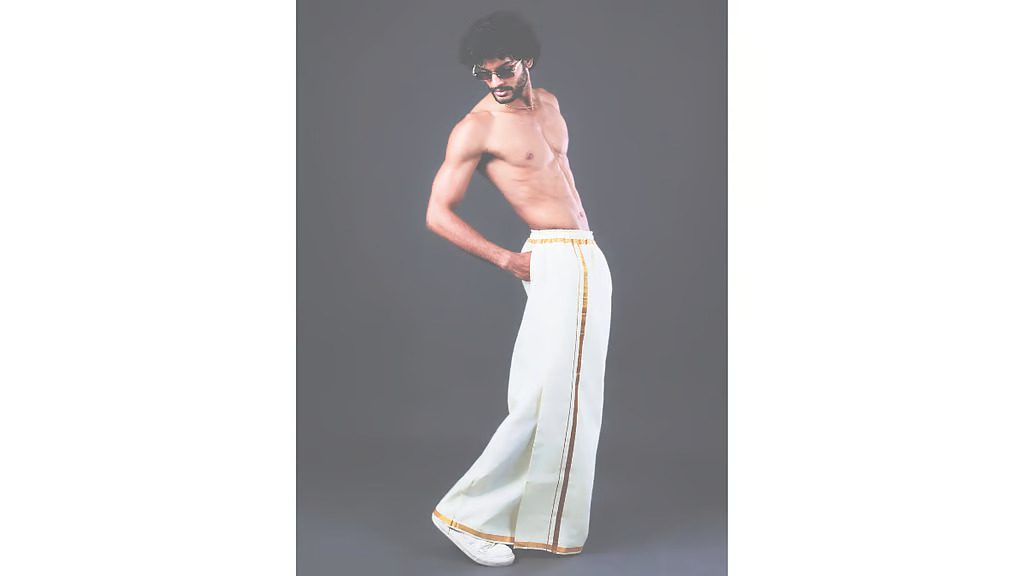
 इस खबर को सुनने के लिये प्ले बटन को दबाएं।


Mozhi Mann Maatram: Purushu Arie’s Bold Fusion of Tamil Heritage and Street Style
If you’re trying to understand what Purushu Arie’s latest collection Mozhi Mann Maatram is all about—and you don’t speak Tamil or know much about its cultural legacy—you might feel a little lost at first. But look closer. It’s not about complicating fashion; it’s about decolonising and demystifying it.
For the Chennai-based designer, preserving Tamil heritage is not about treating it as a museum relic. It’s about keeping it alive—breathing, evolving, and deeply relevant to the present. “I want the money I make to directly contribute to modernising the industry,” says Purushu. “Weavers deserve scale, dignity, and a future—not to be reduced to cultural tokens for elite shoppers.”
Reclaiming Everyday Tamil Folk Culture
Purushu’s vision is rooted in reinterpreting folk aesthetics through a contemporary lens. His streetwear redefines Tamil identity—merging Madras checks with distressed denim, and pairing oversized tees hand-painted with Madras baashai slogans alongside manjappai totes and koodai pinnal baskets. It’s unapologetically Tamil, yet universally cool—proud, layered, and global.
In Mozhi Mann Maatram (“Language, Soil, Change”), he charts Tamil identity through its linguistic evolution—from Aadhi Mozhi (The primal tongue) to Semmozhi (Classical language) and Theru Mozhi (The street language). For him, language isn’t just spoken—it’s worn.
From Keeladi Graffiti to Streetwear
Graffiti unearthed from Keeladi, the archaeological site revealing the earliest Tamil script, inspires prints and textures across the collection. Naturally dyed and handwoven fabrics in turmeric yellow, terracotta red, neem green, kora white, and iron black reflect the soil and spirit of Tamil Nadu.
Where classical Tamil art is often associated with temples and royalty, Purushu’s Semmozhi collection reclaims the folk—from kummi dancers to fisherfolk songs, from rural crafts to Madurai cotton and Vanavasi weaves. It’s a celebration of the everyday Tamil that history books often overlook.
Not Romanticising, But Reimagining
“Dr. B.R. Ambedkar didn’t romanticise handlooms; he questioned their exploitative labour structures,” Purushu points out. “For me, craft revival must go hand in hand with worker rights and fair pay.”
His gender-neutral label, founded in 2017, was one of India’s first to challenge binary norms in clothing. “People used to dismiss gender-neutral fashion,” he recalls. “Now they realise clothing never had a gender—it’s society that assigned one.”
His silhouettes are functional and fluid—anti-slip lungis, veshtis with pockets, and the Pudavai Dress that mimics the drape of a sari but offers modern practicality.
Destruct. Construct. Protect.
“My design process follows three principles,” says Purushu.
-
Construct – Create technical upgrades that make clothing more inclusive.
-
Protect – Preserve ecological and indigenous knowledge systems.
-
Destruct – Dismantle caste and class hierarchies in what we wear and why.
Tradition, he believes, should evolve—not fossilise. “Our Freedom Shirt is oversized and made from a veshti. That’s tradition reimagined through logic, not luxury. Evolution is inherent to culture—and fashion must follow suit.”
With Mozhi Mann Maatram, Purushu Arie doesn’t just create clothes—he crafts a cultural manifesto. One that celebrates Tamil identity in its truest, rawest, and most radical form: decolonised, democratic, and defiantly beautiful.
For more style updates & exclusive fashion stories, follow IndiaFashionIcon.com
 Publisher