
 info@indiafashionicon.com
 Trunal Sahuji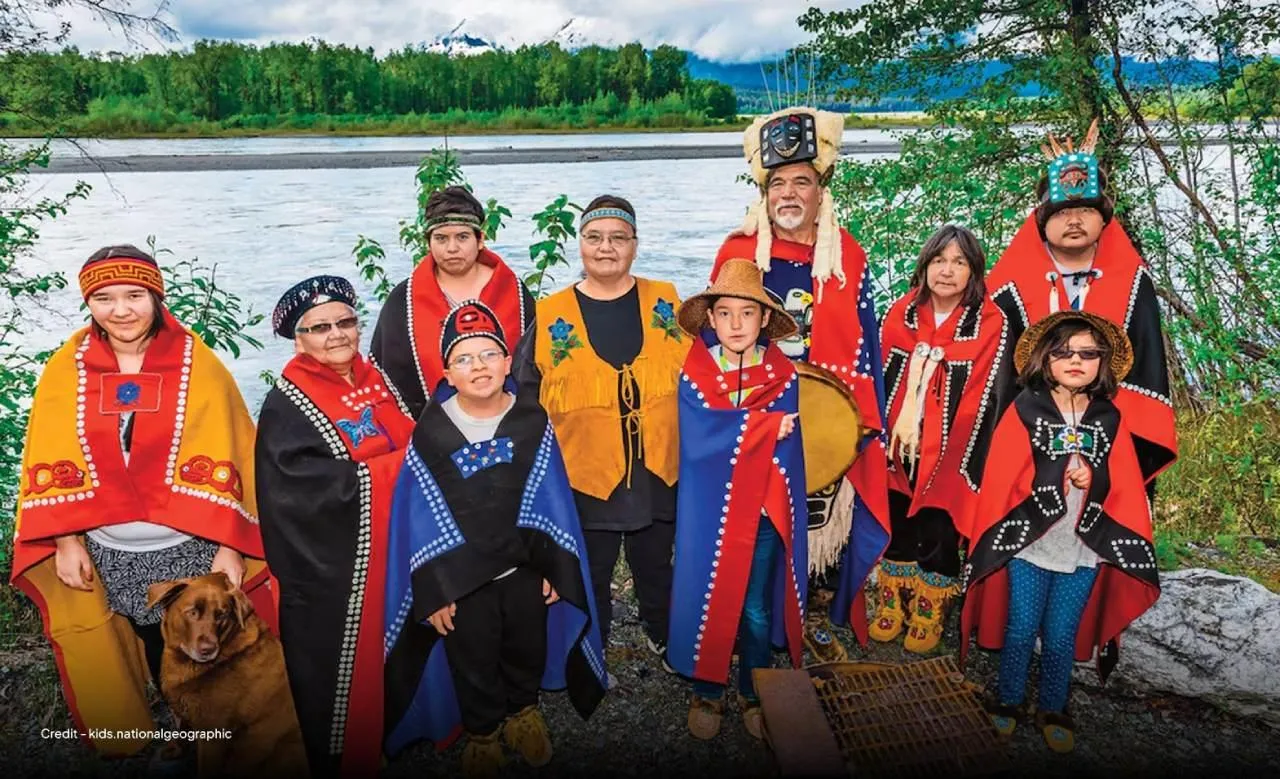
 इस खबर को सुनने के लिये प्ले बटन को दबाएं।


Among the most breathtaking expressions of Indigenous artistry in the Pacific Northwest are button blankets—ceremonial garments worn by First Nations of the region, including the Tlingit, Haida, Tsimshian, and Coast Salish. Far more than decorative scarves or blankets, these robes are storied textiles rich in lineage, ceremony, and ancestral authority.
From Trade Wool to Regal Robes
The origins of button blankets trace back to the 19th century when Indigenous artisans repurposed woolen blankets received through trade—most notably from the Hudson’s Bay Company. In lieu of traditional materials like cedar bark or hide, these blankets served as a richer canvas for cultural artistry.
Crafted in deep navy or crimson broadcloth, these blankets are edged with bold red (or blue) borders and come alive with appliqué designs, often featuring ancestral beings like eagles, bears, ravens, and killer whales. The designs are meticulously outlined with mother-of-pearl or abalone shell buttons, their shimmer imbuing the horses with life during ceremonial dances.
Ceremonial Significance & Clan Legacy
Button blankets are woven declarations of identity and status. Each crest embodies a family or clan symbol, announcing the wearer’s heritage and asserting rights to names, territories, and stories.
Their use at potlatches, naming ceremonies, memorials, and dances underscores their cultural weight. Only individuals with the authority to bear a specific crest may don the robe—confirmed through community recognition and ceremony.
During the era when potlatches were outlawed in Canada (1884–1951), traditional practices including button blanket usage persisted in private—becoming symbols of resilience amidst cultural suppression.
Craft in Community & Continuity
Creating a button blanket is a thoughtful practice of storytelling, craftsmanship, and intergenerational bonding. Family members—often women or elders—carry forward stitching techniques, clan crests, and artistic knowledge.
Artists such as Florence Edenshaw Davidson (Haida) and Maxine Matilpi (Kwakwaka’wakw) have upheld and evolved these traditions, crafting blankets that resonate with ancestral significance while showcasing individual creativity.
Today, contemporary works continue the legacy. Projects like the “Big Button Blanket” collaboratively created by the University of Victoria and Tahltan artist Peter Morin bring educational insight and visibility to this enduring art form.
Museums, Revivals, and Recognition
Institutions such as the Bill Reid Gallery in Vancouver and the Sheldon Jackson Museum in Alaska house significant collections of historic button blankets. These exhibits—alongside workshops and artist talks—ensure the art form thrives in modern consciousness.
Button blankets have also entered broader artistic dialogues—featured in fashion, textiles, and Indigenous design showcases worldwide.
Recognizing Authenticity
Authentic button blankets are distinguished by their materials and craftsmanship:
-
Materials: Rich wool broadcloth, natural shell buttons—not plastic knock-offs
-
Techniques: Hand-stitched appliqué and buttons; meaningful design alignment from elders
-
Provenance: Oral or documented lineage and clan affiliation—often with museum or family records.
For more style updates & exclusive fashion stories follow indiafashionicon.com
 Publisher