
 info@indiafashionicon.com
 Trunal Sahuji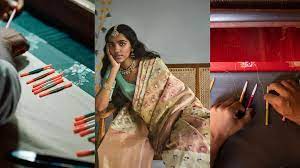
 इस खबर को सुनने के लिये प्ले बटन को दबाएं।


Swadesh, an initiative by ELLE India, celebrates India’s living craft traditions. It preserves and promotes the work of over 70 lakh artisans. Their skills define the nation’s cultural identity. At Swadesh, textiles are more than displays; they reflect the people, techniques, and legacies behind each creation.
Craftsmanship Across Regions
Zardosi – The Royal Embroidery
In Bhopal and Ujjain, artisans continue Zardosi embroidery, once reserved for royal robes. Consequently a hooked needle, they couch metallic threads—earlier gold or silver, now modern alloys—into dense floral and arabesque designs. Therefore, piece is intricate, resembling jewellery. Generations of skilled artisans pass down this craft.
Syahi Begar – Block Printing from Rajasthan
Rajasthan’s Bagru region is known for Syahi Begar, a resist block-printing technique. Artisans carve wooden blocks with geometric designs, apply natural mordants, and layer fabric with vegetable dyes. They create sharp contrasts using only red and black. However the cloth undergoes multiple rounds of dyeing and drying, demanding patience and precision.
Sujini Embroidery – Storytelling Through Thread
Sujini embroidery from Bihar tells vivid stories. Traditionally stitched on old sarees, it uses fine running stitches to depict daily life, folklore, and cosmology. Afterall Swadesh, women artisans continue this craft, transforming old cloth into vibrant panels rich in cultural memory.
Kanjeevaram Silk – The Loom of Legacy
Kanjeevaram silk from Tamil Nadu highlights expert loom work. On a three-shuttle loom, the sari’s borders, pallu, and body interlock seamlessly. Gold or silver zari threads are woven into the warp. Hence, result combines strength and brilliance. Therefore, technique has made Kanjeevaram a bridal staple and a signature of Swadesh collections.
Kal Baffi Carpets – The Art of Knotting
Kashmir contributes Kal Baffi carpets, where precision lies in knotting. However design starts as a taalim, a coded script for weavers. Artisans tie wool or silk knot by knot. Completing a carpet can take months or years. Therefore finished product is durable, dense, and intricately patterned, like a textile map.
Swadesh showcases India’s rich textile heritage while helping crafts thrive today. Thus, by collaborating directly with artisans, the initiative safeguards timeless skills. Moreover, it integrates traditional techniques into modern style vocabulary. Every piece tells a story of cultural pride, heritage, and exceptional craftsmanship.
For more style updates & exclusive fashion stories follow indiafashionicon.com
 Publisher