
 info@indiafashionicon.com
 Vishal Khairnar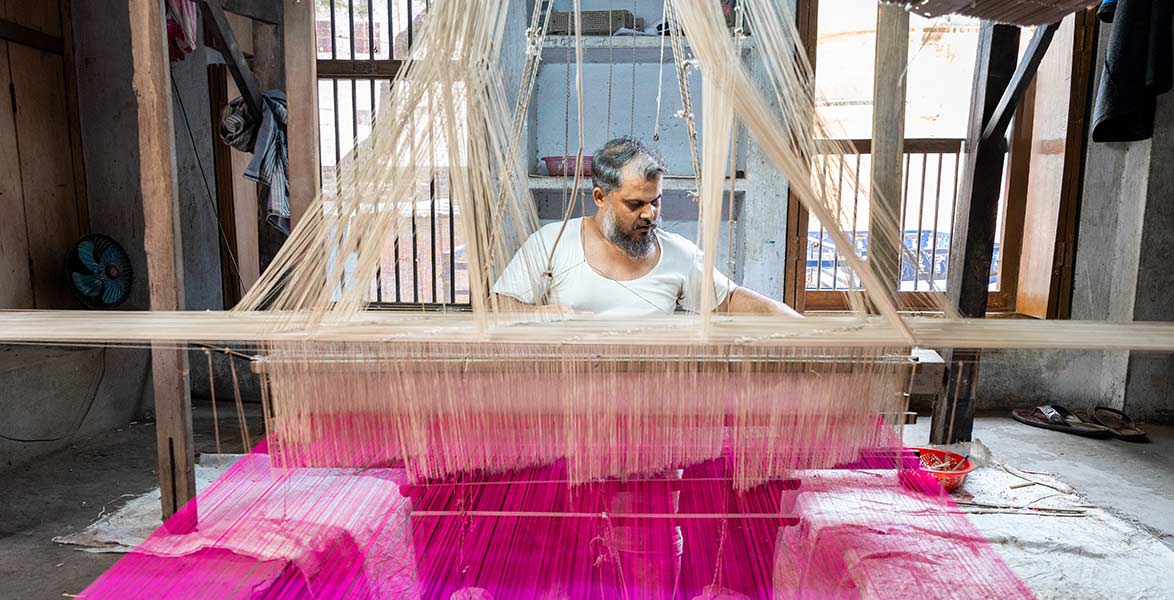
 इस खबर को सुनने के लिये प्ले बटन को दबाएं।


Indian Handlooms: Why Designers Must Respect Craft and Process
India’s handloom industry is one of its most distinctive cultural assets, yet it often finds itself underutilized on contemporary fashion runways. According to Laila Tyabji, founder member and chairperson of DASTKAR Society for Crafts & Craftspeople, designers frequently start with the spectacle—the fashion show, venue, styling, and models—before considering fabrics. The result: a disconnect between extraordinary handloom textiles and their actual use in modern collections.
“Every Indian state has its distinct weaving and motif traditions. Some have a dozen or more,” Tyabji notes. “Handloom should be both the horse and the charioteer of Indian fashion.”
International designers have long recognized India’s textile magic. Over half a century ago, names like Hanae Mori, Zandra Rhodes, Pierre Cardin, and Kenzo sourced ikat, Madras checks, raw silk, and pashmina in India, putting Varanasi and other weaving hubs on the global fashion map. Yet, contemporary Indian designers often shy away from handlooms, deterred by logistical hurdles and tight deadlines.
The Logistics of Handloom Fashion
Sourcing handloom fabrics is rarely straightforward. Weavers, particularly from remote regions, usually do not maintain stock and are reluctant to produce without guaranteed volumes. Output is inherently slower than industrial textiles: a handloom weaver produces between half to five meters a day, compared to 50 meters per day on power looms or industrial mills.
Handloom fabrics also require careful handling. They crease easily, lack stretch, and are meant for draping rather than cutting, making them less suited to certain contemporary Western silhouettes. Cotton handlooms, in particular, need regular washing, starching, and ironing, and generally have a shorter lifespan than synthetic fabrics.
Despite these challenges, the innovation and cultural depth of Indian handlooms remain unparalleled. Designers aiming to make an impact on both Indian and international runways must invest in understanding the weaver’s craft, respecting production timelines, and collaborating meaningfully. Only then can handlooms move from mere heritage artifacts to the centrepiece of contemporary fashion.
For more style updates & exclusive fashion stories follow indiafashionicon.com
 Publisher