
 info@indiafashionicon.com
 Publisher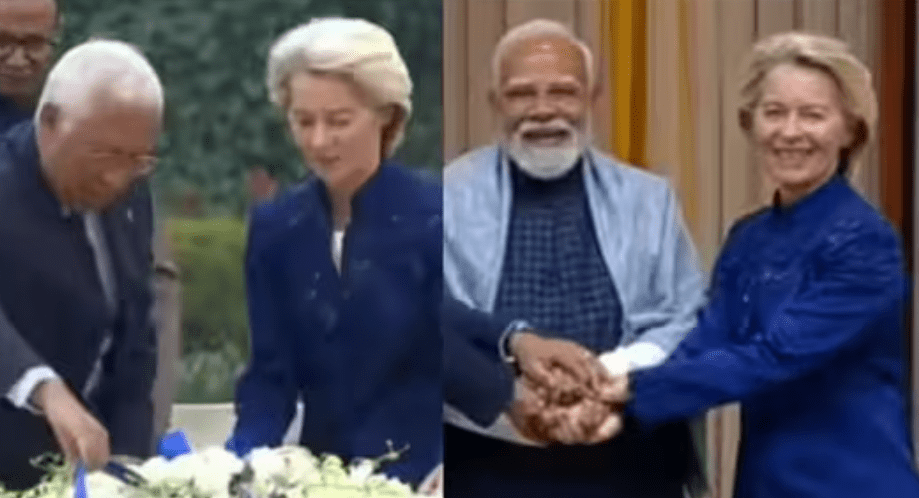
 इस खबर को सुनने के लिये प्ले बटन को दबाएं।


For the India-EU Summit, von der Leyen opted for an ensemble designed by Anamika Khanna, a fashion designer celebrated for her modern interpretations of Indian heritage and craftsmanship. While specific details of the look were showcased in the summit’s media coverage, the choice of Khanna reaffirmed the growing intersection of fashion and diplomacy — where attire becomes a subtle yet powerful form of cultural signalling.
Khanna’s work often plays with traditional Indian silhouettes and artisanal techniques, making her a fitting choice for an international leader aiming to visually bridge cultures at a global forum.
Diplomacy, Culture and Global Partnerships
Ursula von der Leyen’s visit to India this week marks a pivotal moment in India-EU relations, with leaders expected to finalise a landmark free trade agreement and strengthen strategic cooperation across trade, security and technology sectors. Just ahead of the summit, she affirmed that a prosperous India contributes to a “stable, prosperous and secure” world order — underlining deepening ties between the two democracies.
Her sartorial moments — from Republic Day brocade attire to the Anamika Khanna look at the summit — have sparked discussion about how fashion intersects with diplomacy, enhancing narratives of respect and shared values alongside substantive policy engagement on issues like trade and global cooperation.
Cultural Threads in Global Conversations
Observers have noted that von der Leyen’s fashion choices, including her impactful looks at Republic Day and the summit, reflect more than personal style: they serve as symbols of goodwill that can complement diplomatic discourse. In an era where optics play a growing role in international engagement, these sartorial decisions underscore how leaders use culture and design to convey nuanced messages of partnership and mutual respect.
For more style updates & exclusive fashion stories follow indiafashionicon.com
 Publisher